
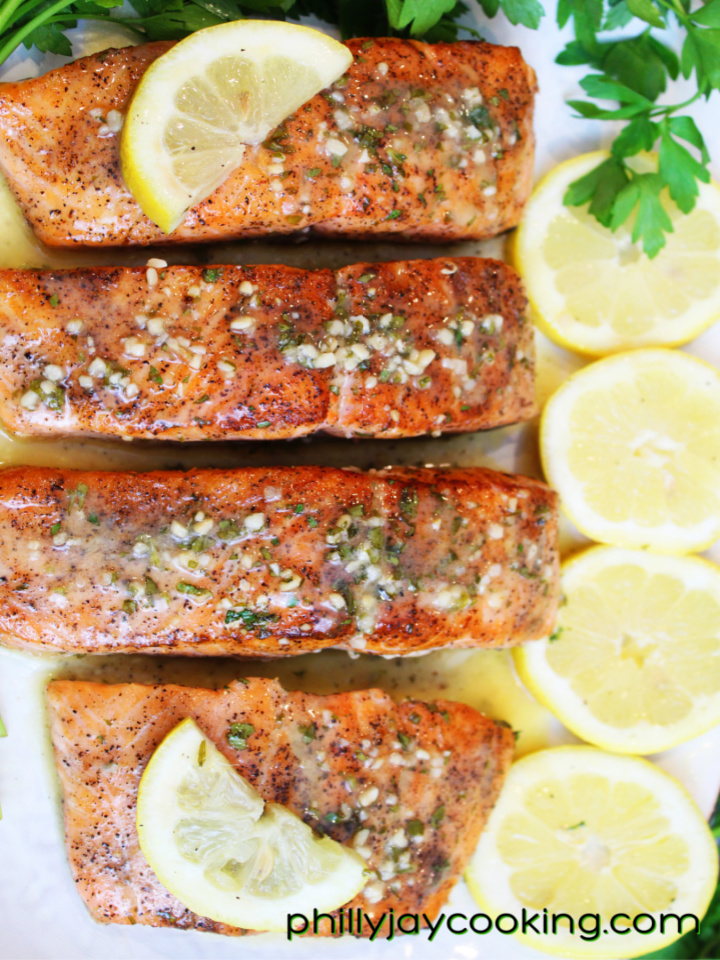
Hey, PBJs! Today I’m going to share one of my absolute favorite go-to recipes. I usually make this dish when I’m craving something light and healthy.
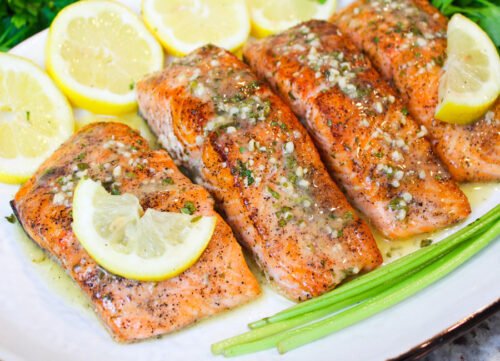
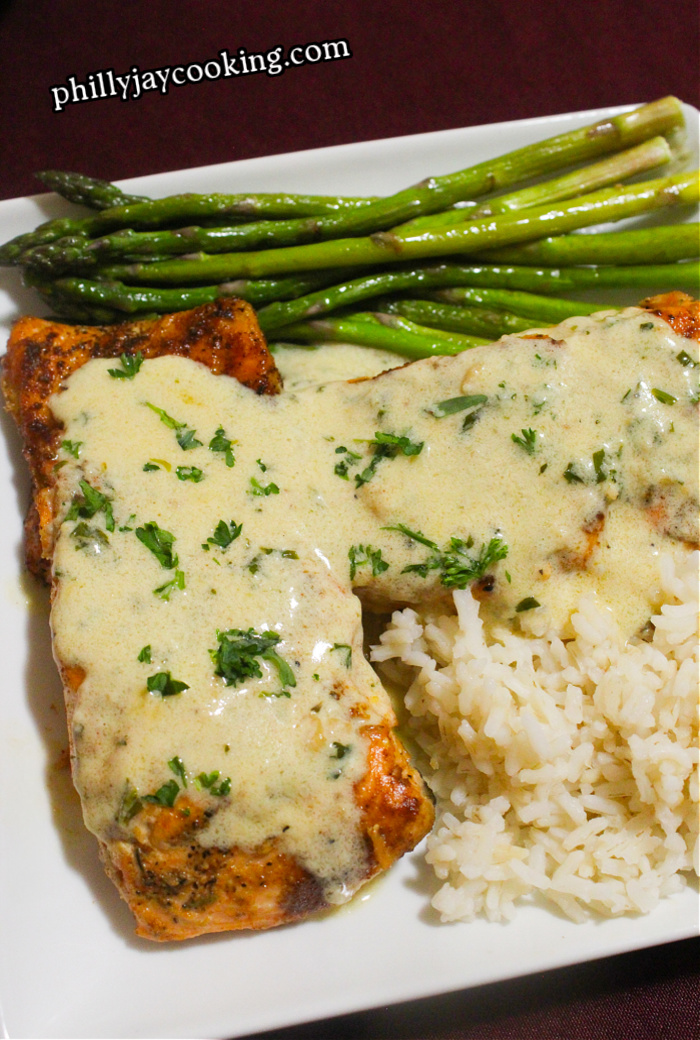
This Salmon and Garlic Lemon Butter Sauce recipe is FIRE; I have a Juicy Tender Salmon And Creamy Garlic Herb Sauce recipe I know you’ll love as well. Try that recipe if you’re looking for a creamy sauce.
Ya’ll might find this surprising, but I didn’t grow up eating fresh Salmon. The only Salmon my folks made was salmon croquettes, and they used canned chopped Salmon to make them. Lol!
This isn’t for shock value ya’ll, I really didn’t get into Salmon until very recently, around my early 30s. It was just one of those foods I didn’t have any interest in trying or had much of a craving for.
For those who might find this weird, know that I’ve never been a big fan of fish. I love crabs, shrimp, and other types of seafood, but I can honestly do without fish.
I have to really be in the mood for fish, and when I am, I usually fry it. I’m talking about flour-coated, crispy, fried whiting and catfish. Lol!
But my mom, who’s been on sort of a health journey, eventually got me into eating Salmon. She would always tell me when she was preparing Salmon for dinner, and she’d even have it for lunch.
She’d also complain about the prices and how expensive it was. Since my mom and I usually go grocery shopping together, I’d always see her pick up a 2-lb pack of Atlantic salmon.
Whenever she’d cook some, she’d always ask me if I wanted any. She is always trying to encourage my sister and I to practice healthy eating habits.
Watch Me Make It
My Love For Salmon Started In Miami
It wasn’t until a trip to Miami that I truly fell in love with Salmon. I took a solo trip down there, and when I arrived, it was a little after 8 PM.
I was starving and just wanted something to eat, so I stopped at the first restaurant I saw. It was right across the street from my hotel, and I walked in a little before they closed.
I wanted something light and asked the waiter what he recommended. What do you think he said? Yep! Salmon and garlic lemon butter sauce. LMBO!
He was like, “We have a really good pan-seared salmon served with a delicious garlic lemon butter sauce.” I thought to myself, “That sounds good, and I should finally try it since Mom Dukes is always telling me how healthy it is!”
So I gave it a shot, and let me say, I was in heaven after the first bite. One of the things I loved most was how tender and moist it was. I also loved how perfectly and lightly it was seasoned.
You could tell they kept it simple and didn’t add a mountain of different seasonings. But the balance and deliciousness of that garlic lemon butter sauce gave me an absolute foodgasm.
I loved that the sauce didn’t have an overly aggressive lemon flavor—it wasn’t tart or overly bitter. It had a perfect lemon-to-butter ratio that made it absolutely perfect.
Oh, and how can I forget how delicious and crispy the skin was? Unlike the skin on fried chicken or pork, which is a guilty pleasure, salmon skin actually offers many health benefits.
It was so good I went back a few days later and made the same order again. I knew when I got home I had to do some research and figure out how to make a juicy piece of Salmon.
I knew at that moment I’d be creating many salmon recipes in the near future. All types of sauces and toppings that pair well with Salmon were going through my mind. Lol!
Well, I finally created a salmon recipe, which my blog was in major need of. Y’all are gonna really enjoy this recipe, so you definitely gotta give it a shot!
Is this a healthy recipe?
A few of my subscribers hit me up on IG asking if this was a healthy recipe. The short answer is: absolutely! Salmon itself is a nutritional powerhouse, rich in heart-healthy omega-3 fatty acids.
It’s also a high-quality, lean protein and contains many essential vitamins. So while I do use a lot of butter to make a rich, velvety garlic-lemon sauce, you’re in total control and can customize the amount.
Feel free to use unsalted butter, reduce the amount, or swap it for a lighter alternative. At the end of the day, it’s all about doing what works for you!
Do you clean your Salmon?
Now, I know some folks might look at me sideways for this, but hear me out! Before I even season my Salmon, I like to give it a quick soak in cold water mixed with a splash of fresh lemon juice or white vinegar.
Old-school cooks have been doing this for generations with fish and poultry, and for good reason. It’s an easy way to clean the fish, remove lingering impurities, and tone down the strong “fishy” aroma some people aren’t too fond of.
You only need to let it sit in a lemon, vinegar, or salt water bath for about 10-15 minutes max. Once the time is up, pull the fillets out and pat them completely dry with a paper towel.
Taking this extra step ensures your Salmon is super clean and fresh. This way it’ll be ready to soak up all that incredible flavor without anything disrupting what you’re trying to accomplish.
Choosing and Prepping Your Salmon
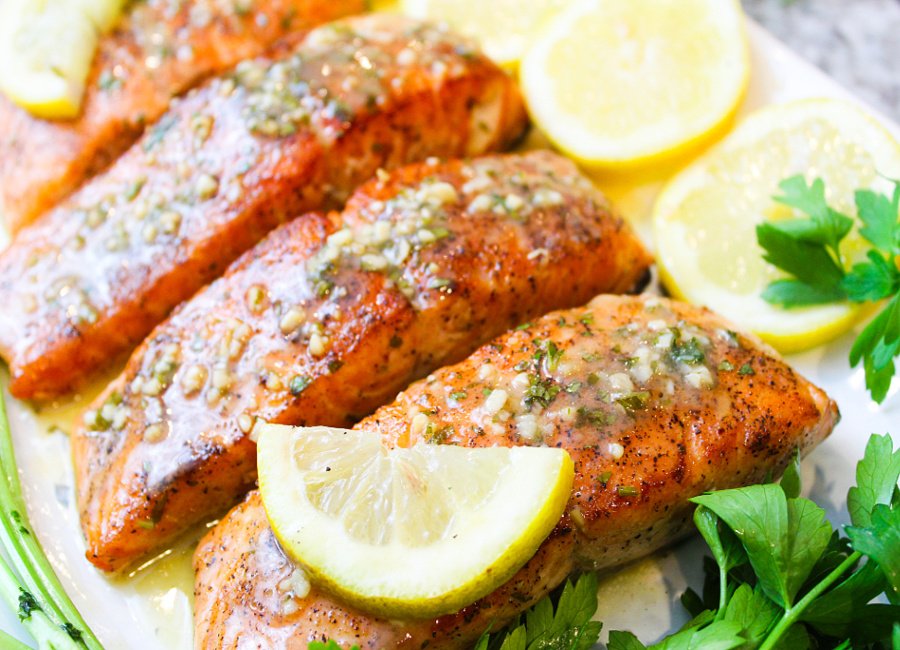
Picking the right cut of fish makes all the difference. Whenever I cook this, I usually grab a 2-lb pack of Atlantic salmon. Atlantic salmon is the only kind I make and im loyal to t as of now! Lol!
Atlantic salmon is farm-raised, which gives it a higher fat content, making it way more forgiving, juicy, and rich compared to some leaner wild-caught varieties.
Plus, it holds up so much better in the skillet without drying out! You can buy your Salmon already cut into individual fillets, which is a huge time-saver.
But if you buy a whole side of Salmon, use a sharp Chef’s knife to cut it into uniform, even-shaped fillets. Doing this will ensure that they cook at the same rate.
As for scaling and cleaning—most of the time, the fishmonger at the grocery store has already done that for you.
But if you bought fresh fish from a local market and notice a few scales left on the skin, you’re gonna have to remove them yourself.
Just take the back of your knife blade and gently scrape it against the grain from tail to head. Rinse it under cold water to remove all the scales.
Then pat the fillets completely dry with a paper towel before seasoning. Getting rid of excess moisture is the secret to getting that skin nice and crispy, which I’ll touch on in a few! Lol!
Why is less more with seasonings?
When you’re working with fresh, high-quality seafood, doing too much with too many spices doesn’t always work out well. Sometimes, less is best!
Just a simple pinch of salt and pepper lets the natural flavor shine. Salmon and garlic lemon butter sauce go together like peanut butter and jelly!
So, since we’re using a garlic-lemon butter sauce, you want it to do the heavy lifting. You don’t want a bunch of spices clashing with the sauce, so we’re using only salt and pepper.
We’re using salt to enhance flavor and provide taste, pepper for warmth, and paprika mainly for color. That’s all the seasonings you need for this recipe, since the sauce provides all the flavor.
Mastering tenderness and doneness
When it comes to cooking a succulent, tender restaurant-quality piece of Salmon, getting the timing right is everything. Fish cooks exceptionally fast, and the #1 mistake people make is overcooking the Salmon in the skillet.
This leaves you with a dry, chewy texture, which is what we don’t want. To keep your Salmon fillets juicy and melt-in-your-mouth tender, aim for a total cooking time of 7 to 8 minutes over medium heat.
The thickness of the Salmon may mean you need to lengthen the cooking time. But generally you don’t want to cook Salmon over medium heat for more than 8 minutes.
One of the easiest ways to monitor how cooking progresses is to watch the color change on the sides of the fillets. As the salmon sears skin-side up, you will actually see the flesh transition from pink to an opaque peach color.
Once that peach color has traveled halfway up the sides of the Salmon, which usually takes about 4 minutes, it means the Salmon is halfway done.
At this point, you flip the salmon skin-side down. After you flip the Salmon, continue cooking it until the entire side turns the same opaque peach color.
This will basically signal the doneness of the Salmon. However, if you prefer exact precision or want to double-check your Salmon’s doneness, insert a digital meat thermometer into the thickest part of the filet.
Fish is safely done when it reaches an internal temperature between 140°F and 145°F, giving you tender, flaky perfection every single time.
What is the secret to crispy Salmon skin?
I’m going to be honest, I probably won’t love Salmon as much if not for the skin. Lol! The crispiness of the skin is one of the things I love most about it.
To get the salmon skin nice and crispy, you just have to sear it for a few minutes. I sear it skin side down in a little olive oil for 4-5 minutes.
The skin crisps up pretty quickly when you cook it over medium heat. I prefer medium over medium-high because I don’t want to risk burning the skin.
How to Make the Ultimate Garlic Lemon Butter Sauce
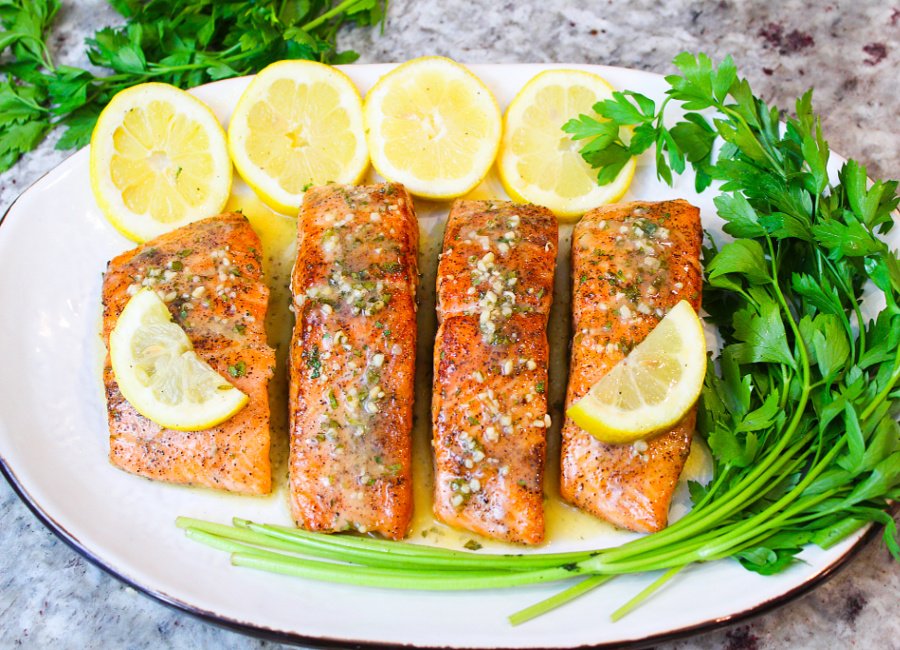
People always ask what takes this Salmon from a basic weeknight meal to an absolute showstopper. What takes this Salmon up a notch is right in the recipe’s title. Lol!
When you’re making a garlic-lemon butter sauce, the secret is in the balance and measurements. Sticking to these ratios is what gives you that perfect balance in flavor.
- Butter: Using 1/4 cup of butter gives the sauce a rich, velvety texture and serves as the decadent base.
- Lemon juice: Fresh lemon juice provides tartness and gives our sauce its lemon flavor.
- Minced Garlic: I use minced Garlic to give the sauce a nice, pungent, savory kick.
- Cornstarch: To bring it all together, I whisk in a slurry made with 1/4 teaspoon of cornstarch. You only want to let the sauce simmer for about 2 to 3 minutes until it thickens up a bit.
- Lemon Pepper seasoning: Lemon pepper seasoning enhances the lemon flavor without making the sauce overly tart or bitter. If we relied purely on lemon juice, it could overpower the fish with its strong citrus flavor.
- Parsley Flakes: Parsley is used to enhance the sauce and add a pleasant aroma. You can use finely chopped fresh parsley or stick with parsley flakes.
Tips for Best Results
- Room Temperature Salmon: Let your salmon fillets sit on the counter for about 10 to 15 minutes before cooking so they don’t hit the hot skillet stone-cold, which helps them cook evenly.
- Pat Completely Dry: Whether using fresh or thawed Salmon, always pat the fillets completely dry with a paper towel before seasoning to get that ultimate crispy skin.
- Get the pan hot first: Make sure your skillet and oil are fully heated before dropping the fish in skin-side down. You should hear that immediate, satisfying sizzle!
- Don’t crowd the pan: If you’re cooking multiple fillets and your skillet isn’t big enough, cook them in batches. Crowding the pan lowers the temperature and traps steam, preventing that crispy skin we want.
Serving Suggestions
In my opinion, this dish is best served over a good bed of rice to soak up every last drop of that garlic lemon butter sauce. It tastes great with white, yellow, and even brown rice.
You can also pair it with roasted asparagus, broccoli, or a fresh side salad to keep the meal light and well-rounded. Egg noodles pair well with Salmon, too, because they’re neutral in flavor, like rice.
Storage & Reheating
- Refrigerator: Store the leftovers in an airtight container for up to 3 days.
- Reheating: Reheat the Salmon gently in a skillet over low or low-medium heat. Hit it with a splash of water or extra butter to keep it from drying out. I would avoid reheating it in a microwave, because it can dry it out and make it rubbery.
Frequently Asked Questions
- How long do they last? They last up to 4 days. I wouldn’t keep them in a very cold fridge for too long because they will become limp and soggy.
- Scaling the Recipe: Easily double or triple the ingredients when cooking for a larger family gathering or dinner party. Just make sure to cook the Salmon in batches, so you don’t overcrowd the skillet.
- Can I use frozen Salmon for this recipe? Absolutely! Just make sure you completely thaw the salmon fillets in the refrigerator overnight before cooking them. Once they’re thawed, pat them completely dry with paper towels so the skin gets nice and crispy.
- Can I use a different type of Salmon? Yep! Atlantic salmon is my go-to because it’s farm-raised and has a higher fat content, which keeps it extra juicy and forgiving in the skillet. But you can also use wild-caught varieties like Sockeye, Coho, or Chinook. Just keep in mind that wild-caught Salmon is leaner and cooks a bit faster, so you’ll want to watch it closely to keep it from drying out!
- Do I have to keep the skin on the Salmon? Not at all! I personally love the skin because it gets super crispy and holds the filets together nicely in the skillet. However, you can definitely buy skinless salmon fillets or slice the skin off yourself if that’s what you prefer.
- Why did my garlic lemon butter sauce separate? Butter can break or turn oily if it’s exposed to high heat or left over the burner for too long. That’s why it’s super important to turn your burner down to low (or take the skillet completely off the heat) right before you whisk in the butter. Letting the pan heat melt the butter makes all the difference in creating a smooth, glossy, velvety sauce!
- Can I make this recipe by baking the Salmon instead? Most definitely! If you prefer to bake your Salmon rather than sear it in a skillet, season your fillets the same way first. Then place them on a baking sheet and bake at 400°F for about 17 minutes or until they reach an internal temperature of 140°F–145°F. While you won’t get the same super-crispy skin you get from a hot skillet, it’s a super-easy, hands-off way to do it. Just make the garlic lemon butter sauce separately on the stove and spoon it right over the Salmon when it comes out of the oven!
- Can I use bottled lemon juice? For the absolute best flavor, fresh-squeezed lemons are definitely the way to go, since this sauce relies so heavily on that clean, bright citrus flavor. Bottled lemon juice often contains preservatives and can taste a bit bitter or flat. That can completely throw off that rich, velvety balance we want in the sauce. The flavor won’t be nearly as vibrant!
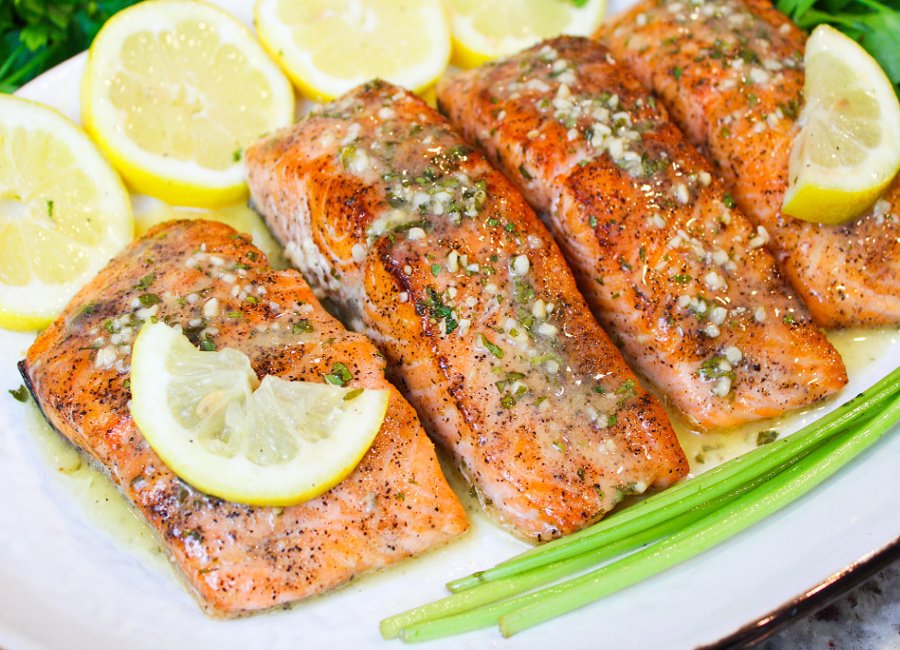
Other Seafood Recipes You Might Like
Ok that’s it for now. I know y’all are going to love this recipe and will make it a staple in your home. Give the recipe a 5-star rating if you enjoy it as much as I do. Subscribe to receive email notifications every time I post a new recipe.
Enjoy later.
Pbj~
Pan Seared Salmon And Garlic Lemon Butter Sauce
- Prep Time: 20 Mins
- Cook Time: 10 Mins
- Total Time: 30 Mins
- Yield: 3-4
- Category: Fish & Seafood
- Method: American
- Cuisine: American
Description
Juicy, tender, well-seasoned Salmon fillets smothered in a delicious garlic lemon butter sauce. A top-tier Salmon & garlic lemon butter sauce recipe!
Ingredients
Salmon
- 2 Lbs Atlantic Salmon Fillets
- 6 Tsp Olive Oil
- 1 Tsp Salt
- 1/2 Tsp Paprika
- 1/2 Tsp Black Pepper
Garlic Lemon Butter Sauce
- 1/4 Cup Butter
- 1/4 Cup Lemon Juice
- 1/4 Tsp Cornstarch
- 2 Tsp Minced Garlic
- 1 Tsp Parsley Flakes
- 1/2 Tsp Lemon Pepper
Instructions
- Season all sides of the salmon fillets with salt, paprika, and pepper.
- Place a large skillet over medium-high heat.
- Add the Olive oil.
- After 3 minutes, place salmon fillets into the skillet flesh side down.
- Cook for 4 minutes, then flip skin side.
- Cook for 4 minutes, then set salmon aside.
- Add lemon juice to a small bowl.
- Stir in the cornstarch until well dissolved.
- Place the skillet back over medium heat.
- Add the garlic and the lemon-cornstarch mixture to the skillet.
- Gently simmer for about 2 minutes, stir periodically.
- Reduce the heat to low.
- Add the butter, lemon pepper seasoning, and parsley flakes.
- Whisk until the butter melts into a smooth glossy sauce.
- Scoop the garlic lemon butter sauce over the salmon.
Notes
- Clean the Skillet First: After searing your salmon, wipe out any excess oil and burnt bits from the pan before making your sauce. Doing this keeps your garlic lemon butter sauce looking clean and bright instead of muddy!
- You want more sauce: Some people who tried the recipe said they would have liked more sauce. If you prefer a lot of sauce, just double the ingredients and follow the same steps.
Nutrition
- Serving Size: 3








This was delicious! Thank you!!!
Thank you!!!!!!!!!!!!! 🙏